
Yukon Yearning
By Polly Mahoney
Growing up in Maine, I had no interest in being inside especially the kitchen! When I was starting my life in the far north in northern BC and the Yukon I was drawn to the mountains and wanted to spend as much time as I could in the bush. When the opportunity arose to be a cook at a big game hunting camp I thought, great I can ride horses in the mountains and learn to cook and get paid for it! Wow! I bought a couple cookbooks, one being The Northern Cookbook, and headed off on horseback with the other guides for a 4 day ride to get to our base for the season on a lake. There was a lot to do to get ready for the 3 month season, setting up wall tents, stocking them with firewood, scouting for animals, etc.
The animals the hunters would be looking for in their two week hunts were moose, caribou, Fannin sheep, mountain goats, grizzly and wolf. We used horses for riding to hunt and packing out the meat. The first year I went out I was the cook. I knew nothing about it and had a small sheet metal woodstove to cook on in a wall tent with a dirt floor. I was the only woman in camp. I used to prepare food, serve it and then take notice of people’s faces whether they liked what I cooked or not!
Because I was a good rider I had the pleasure of riding some of the younger horses that were not especially adept at mountain travel and all the things that can come with it such as bogs that will suck you down, steep areas, scree slopes to cross, tying off to scrub bushes at tree line to keep hunting on foot, crossing raging rivers, cutting our way through thick woods or bush. One horse I often rode was called Cal. He was a small chestnut who loved to buck. They gave me a saddle with a high horn and cantle to help keep my seat as he bucked around the mountains until I would get him to stop!
Wrangler
The next two seasons I was a horse wrangler, which I liked a lot more. Because we were in the high country there was not a lot of grass or feed for the horses so we let them loose at night some with bells on their necks to hear where they went and some with hobbles on their legs to keep them closer to camp. I would go out just before day break to find them. There was one horse in particular I would try to find first. His name was Beaver. If he heard me coming he would stand in the thickest willow bushes he could find with his neck tucked up holding his bell still so I wouldn’t hear him. But once I got him I would only need to sit on his back with him bridled and he would take me around to where all the horses were. He was a great horse and really helped me with my job, assuming I could find him first!
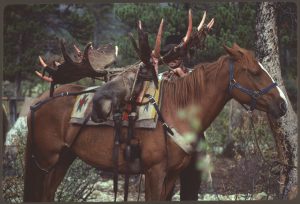
We had spike camps to hunt from away from our base camps so would go there for a few days to get closer to the animals we were hunting. One day we rode up into the high country, the hunter shot a moose, we packed it up on one of the horses. The guide and hunter asked if I would ride it back to camp as they wanted to keep going to see about getting a caribou. I said sure and turned around and started riding back to camp. After a while I realized I couldn’t find the trail to camp down out of the mountains so I put the big pack horse carrying the moose rack in front of me and followed him back down out of the mountains to camp. Horses always want to go home! I was glad no one was there to see me!
Working at hunting camps was my first exposure to working with Native people and in this instance the Tlingit people of BC. I really enjoyed being with them, their quiet style, laid back manner and acute attention to animals and their surroundings. Little did I know this would be the beginning of my many years working with different Indigenous people in northern communities.
For more articles about hunting, fishing and the great outdoors, be sure to subscribe to the Northwoods Sporting Journal.